
Rewrite in spannish language the following text completely:
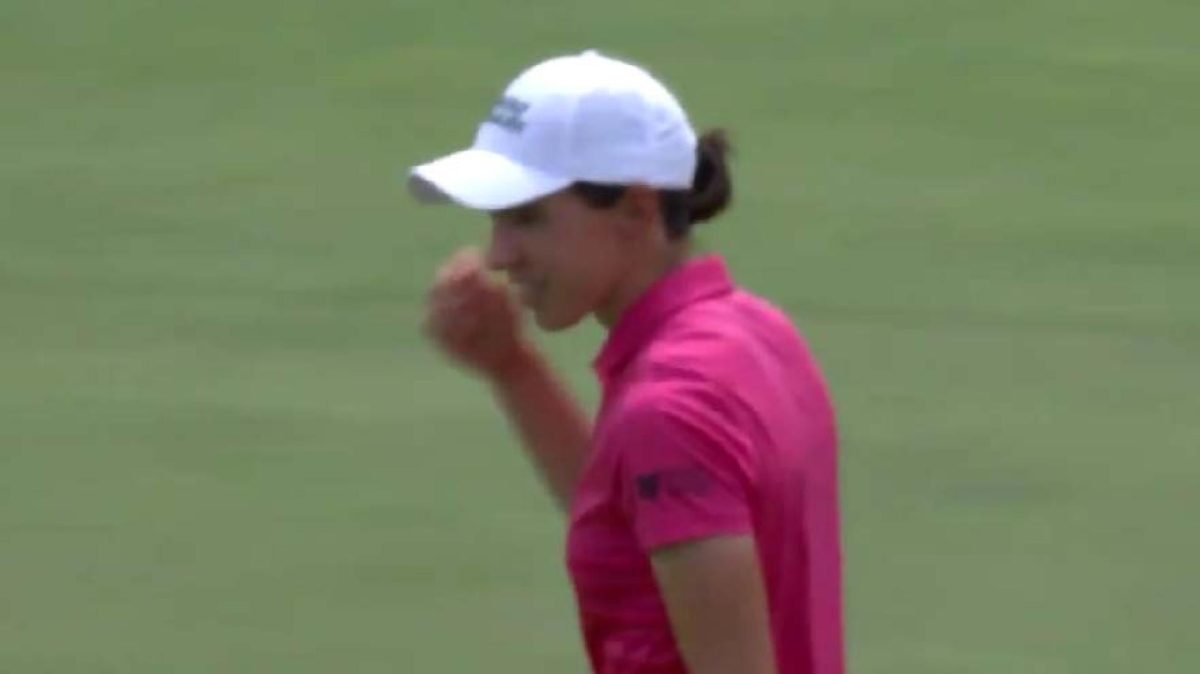
Julia López, Paula Martín, Andrea Revuelta, Carla Bernat, Carla Tejedo, Carolina López Chacarra… They all grew up watching Carlota Ciganda compete. While they dreamed of reaching the LPGA or playing in the Solheim Cup, the golfer from Navarre was already years into battling it out with the world’s best. Today, they share the tour with her. And whenever they have a question, they know they can approach her, because she’ll always be there for them.
Ciganda, statements
That role comes naturally to Carlota. «I love it when the girls ask me things. I’m happy to help if they have questions,» she explains. Perhaps it’s because she remembers exactly what it was like starting out. When she was an amateur, women’s golf rarely got any coverage, and her role models were Seve Ballesteros, José María Olazábal, and Marta Figueras-Dotti—the first Spaniard to cross the Atlantic and embark on the American college golf adventure.
Now, *she* is the inspiration. She embraces this with the easy, unassuming manner of someone who has never sought to draw attention to her own achievements. «I like being seen as a role model, but these girls arrive very well-prepared. They know I’m here for whatever they need, and I hope that in the coming years, many more Spanish women will come along, win tournaments, and play in Solheim Cups.»
Her track record explains why young players look up to her as a role model: three LPGA victories, seven Solheim Cup appearances, four titles with Team Europe, and the unforgettable memory of Finca Cortesín, where she clinched the decisive point against Nelly Korda.
Yet, that success hasn’t changed Carlota. «I still see myself the same way—just Carlota, the kid,» she says with a laugh. And she immediately explains why. «My parents have done a great job keeping me grounded. Whether I win or lose, make the cut or miss it, the next day I go back to doing the same thing. I love getting up, going to the gym, training, taking care of myself… The process remains the same.»
That is one of the keys to a career that has already spanned over fifteen years at the world’s elite level: consistency. «If you have talent but lack effort, you won’t go as far or be as consistent. That daily work is what has given me longevity.»
It is a point she reiterates several times during the conversation. For her, there are no shortcuts. «In professional sports, there are no tricks. It’s about work, habits, routine, and enjoying the process. There will be good days and bad days, but if you want something, it’s achievable.»
Perhaps that is why she speaks so enthusiastically about the young Spanish players. She follows them closely and is well aware of each one’s strengths. Regarding Julia López, she highlights her «enormous potential» and believes «she’s going to bring us a lot of joy.» She speaks of Paula Martín’s determination and Andrea Revuelta’s maturity—remarkable for her age. «They have a very clear vision, they play exceptionally well, they know their strategy, and they don’t make mistakes.»
She admires Carla Bernat’s «grit» and Carla Tejedo’s «characteristic fighting spirit.» As for Carolina López Chacarra, she highlights «her positive attitude and eagerness to learn.» She doesn’t feel like a new generation is coming to take her spot—quite the opposite. «It makes me so happy to see so many Spanish players and to hear Spanish being spoken on the Tour.»
Carlota insists that they arrive even better prepared than she was when she made the leap. «Today’s rookies know so much more than I did when I turned pro. They have technology, TrackMan, great coaches, fitness trainers, nutritionists… Everything has become so much more professional.»
That doesn’t mean the path is easy. «I know that breaking into the LPGA isn’t easy, because I’ve been through it myself. You’re competing against the best in the world, and every country has highly prepared players. But the good times will come.» When a new player arrives on the LPGA Tour, she tries to help without overstepping. «I’m here for whatever they need, but each of them has to forge her own path. They have to make mistakes, learn… Golf is a very individual and personal sport.»
That experience also leads her to recommend that young players spend time in the U.S. college system. «You learn what life is like here, you play the courses, and you arrive much better prepared. I’d do it all over again in a heartbeat.»
Carlota views the current state of Spanish women’s golf with optimism. She believes the Federation is doing a great job and that the standard of play keeps rising. «Spain is right up there in European competitions; it’s wonderful to see how they compete and support one another… That fighting spirit is our trademark.»
. Rewrite the h2, h3 tags. Each sentence must be different from the original text. Rewrite in a full 350 words minimum engaged blog article in spannish language, with html tag and format
,
, ,
, . Use 3 or 4 different subheading with
html tag. Give it lot of nuance. Write as real spannish and human journalist wrote it for Google News. Add strategic SEO keywords in . At the end of article, add 3
- sources, magazines or citations with the names of spannish specialists, journalists, experts in golf.
Como joven medio de comunicación independiente, Total News Golf.com necesita tu ayuda. Apóyenos siguiéndonos y marcándonos como favoritos en Google News. Gracias por su apoyo !
html tag. Give it lot of nuance. Write as real spannish and human journalist wrote it for Google News. Add strategic SEO keywords in . At the end of article, add 3
- sources, magazines or citations with the names of spannish specialists, journalists, experts in golf.
Como joven medio de comunicación independiente, Total News Golf.com necesita tu ayuda. Apóyenos siguiéndonos y marcándonos como favoritos en Google News. Gracias por su apoyo !
Como joven medio de comunicación independiente, Total News Golf.com necesita tu ayuda. Apóyenos siguiéndonos y marcándonos como favoritos en Google News. Gracias por su apoyo !