
Rewrite in spannish language the following text completely:
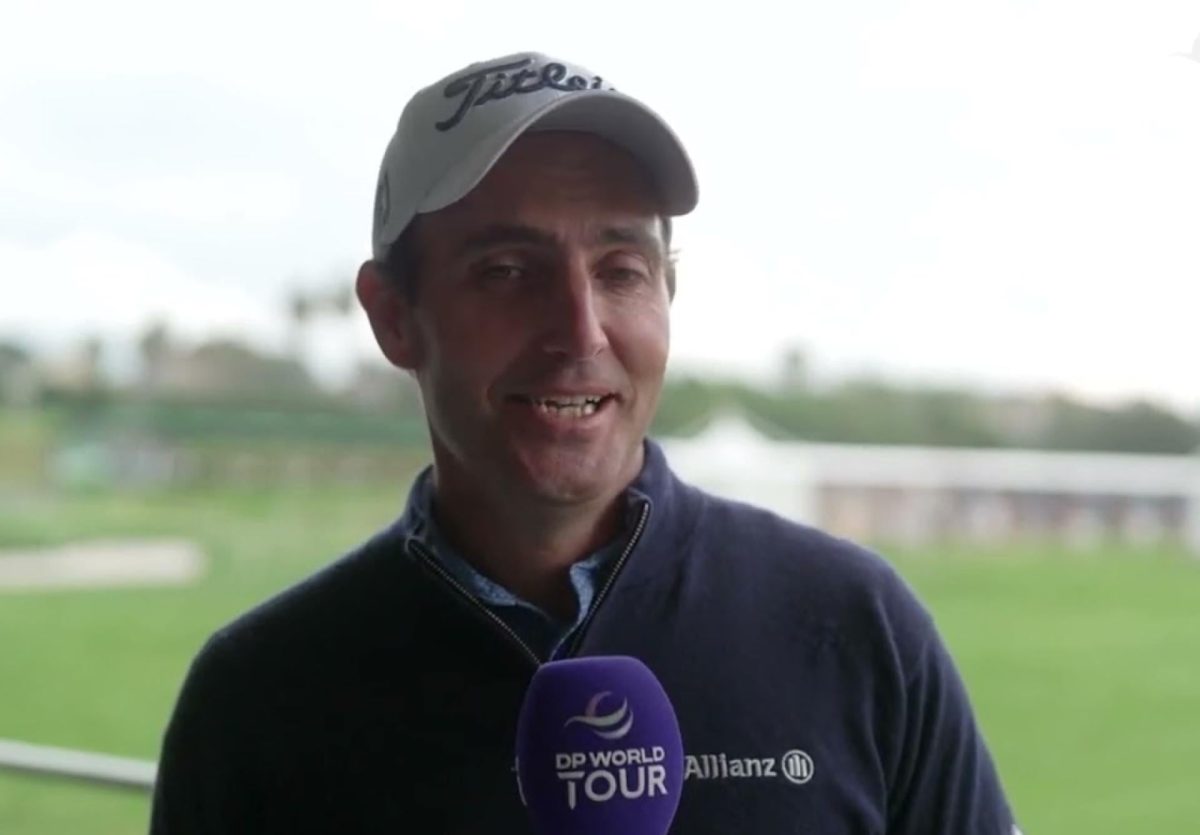
The pitfalls, the most difficult and the easiest holes, strategy, and tips: Edoardo Molinari, confirmed as Ryder Cup vice-captain for the third time and who will also be among the protagonists on the course, discusses the 18 holes of the Torino-La Mandria Golf Club, which will host the 83rd DS Automobiles Italian Open from June 25th to 28th. The older brother of Francesco Molinari, Edoardo turned professional in 2006 and on November 29, 2009, together with his brother Francesco, brought the World Cup won at the Omega Mission Hills World Cup in China to Italy.
Edoardo Molinari, statements
Hole 1 – A par five with a dogleg to the right, easily reachable in two shots by all players. Difficulties can arise with a short flag because water comes into play; however, if the flag is long, there is a good chance of staying under par.
Hole 2 – A fairly short par four, even though the hole has been lengthened by about 15 meters. There are bunkers on the left as you hit the drive; the second shot to the green is quite accessible, but be careful of the long flag if it’s positioned on the left, as it could be difficult to hit.
Hole 3 – Par four with a dogleg to the left; a drive from the tee is not recommended; it’s better to play a hybrid and then choose an 8- or 9-iron. Be careful with the second shot: the green is surrounded by a stream that forms a small island. The most difficult flags are definitely those at the back of the green on the right, where the water is most at risk.
Hole 4 – Par four with a dogleg to the left: the first shot is usually a drive over the bunkers and plants on the left, then a wedge is used to reach the green, which is very small and therefore tricky. Interesting flags at the back left, fairly easy to hit because you can take advantage of a downhill slope, but also dangerous because of the water behind it.
Hole 5 – Par three, a hole that on paper appears to be the easiest on the course, but I don’t think this will be the case during the Open because there will be some very difficult flags on the right. The green is small, and with the flag at the far left, the hole becomes quite long.
Hole 6 – This is the most difficult hole (par four) on the course, due to its length (420 meters), the trees on the left side, and the bunkers on the right that require a drive. A good tee shot is key, and once the ball is in play, the second shot is quite simple because the green is large and has few defenses.
Hole 7 – A short par four starting in front of the clubhouse. From the tee, you’ll have to decide whether to play a drive to be more aggressive or to lay out with a 3-wood or even an iron. There are bunkers on the right and a forest on the left protecting the very large green. The placement of the flags can create problems by bringing the bunkers around the greens into play.
Hole 8 – A slightly downhill par three; The green is large, but at the same time very well defended by bankers both left and right. The flag at the back can be tricky because it becomes a par three, almost 200 meters long from the tee. In short, a hole where you need to be careful, and a par is always a good result.
Hole 9 – Par five with a slight dogleg to the right where there’s a water hazard, even though it’s quite far from the fairway. With two good shots, you’ll definitely reach the green, which is quite narrow and very long. There are some bunkers on both sides for protection, and the flag at the back left is certainly the most difficult. This is a hole that’s difficult to reach with a second shot.
Hole 10 – Par four with a dogleg to the left and a bunker on the right at the end of the drive. Longer players will certainly hit this because they can fly it; those who can’t will likely use a 3-wood in the middle of the fairway and then hit an 8-iron to reach the split-level green.
There are many difficult flag positions:
at the back and also on the short left side, well-defended by bunkers positioned around the green.
Hole 11 – A straight par four with a fairly generous tee shot, although there are bunkers on both sides, with a wide fairway. The second shot isn’t particularly difficult, except when the flag is at the back right, where the green is quite narrow, making it difficult to putt the ball close to the pin.
Hole 12 – Normally a par five, it will be played as a par four, starting about 10 meters further. It will certainly be the longest and most difficult hole on the course, and the green can only be reached with two good shots: a drive and a 5-iron. The tee shot is difficult because there are bunkers on the left and right with plants that can come into play on the shot to the not-so-large green. Be careful on the left side, where there’s a slope that carries balls away.
Hole 13 – This is my favorite hole, one of the most beautiful on the course, a par three that’s not very long. Typically, a 6-iron is used if the shaft is long, or an 8-iron if the shaft is short. There’s a small stream that protects the short flags.
Hole 14 – A fairly short par four with a dogleg to the right. You can play a driver to get within 40-50 meters of the green, although it’s quite narrow and there are plants on the right and bunkers on the left; Alternatively, you can hit a hybrid or an iron and place the ball, then hit the green with a 9-iron. Be careful, because if you miss the fairway on your first shot, there are plants everywhere.
Hole 15 – The longest par five on the course, reachable in two shots only by players who can get distance. There are numerous bunkers both at the end of the drive and around the green, perhaps the most difficult of all because it has many levels and slopes. There are several interesting flag positions, especially on the left side of the hole.
Hole 16 – A par three of over 200 meters, the most difficult on the course. The green is very small and has a short bunker on the right and a second on the left. The most difficult flags are those on the left, because a mistake can lead to a bunker and making an exit is almost impossible.
Hole 17 – A long par four with a dogleg to the left, where there is a bunker that 70% of players should be able to hit. Once you’ve hit a good tee shot, a 9-iron or wedge is all you need to reach the split-level green. There are some very interesting flags on the left side, but be careful, as missing the green can cause a minor disaster.
Hole 18 – It ends with a straight par-four that heads back toward the clubhouse, past some very tall trees on the left side. The tee shot is quite generous, meaning the fairway is very wide when you hit the drive. The green, again split-level, is very large and long, with bunkers on both sides. With long flags or those on the left, you need to be careful, as missing the green makes the approach very difficult.
. Rewrite the h2, h3 tags. Each sentence must be different from the original text. Rewrite in a full 350 words minimum engaged blog article in spannish language, with html tag and format
,
, ,
, . Use 3 or 4 different subheading with
html tag. Give it lot of nuance. Write as real spannish and human journalist wrote it for Google News. Add strategic SEO keywords in . At the end of article, add 3
- sources, magazines or citations with the names of spannish specialists, journalists, experts in golf.
Como joven medio de comunicación independiente, Total News Golf.com necesita tu ayuda. Apóyenos siguiéndonos y marcándonos como favoritos en Google News. Gracias por su apoyo !
html tag. Give it lot of nuance. Write as real spannish and human journalist wrote it for Google News. Add strategic SEO keywords in . At the end of article, add 3
- sources, magazines or citations with the names of spannish specialists, journalists, experts in golf.
Como joven medio de comunicación independiente, Total News Golf.com necesita tu ayuda. Apóyenos siguiéndonos y marcándonos como favoritos en Google News. Gracias por su apoyo !
Como joven medio de comunicación independiente, Total News Golf.com necesita tu ayuda. Apóyenos siguiéndonos y marcándonos como favoritos en Google News. Gracias por su apoyo !