
Rewrite in spannish language the following text completely:
There are golfers for whom winning a major is the end of the road, the culmination of a career, and others for whom it’s a logical consequence of their talent. Almost an innate right, which then needs to be cultivated because talent alone, without any enhancements, isn’t enough. You either nurture it or it withers. Jon Rahm, one of those who nurtures it, was always in the second group. He was never going to win just one. It was either several or none. And when he conquered the US Open (2021) and the Masters at Augusta (2023) in the space of a couple of years, it seemed like he was going to win them all.
Not nearly enough time has passed since that green jacket to raise the debate about his ability to reach the summit of one of the four 8,000-meter peaks in this sport. He’s 31. Rory had to wait ten years between his fourth and fifth. But it is somewhat worrying that lately seeing him hovering near the top of the leaderboard on Sundays has gone from being almost a constant to an anomaly. He’s played in ten majors in the last three years, and it’s only happened twice. In the last two PGA Championships. As many times as he’s missed the cut in that span.
Rahm, statements
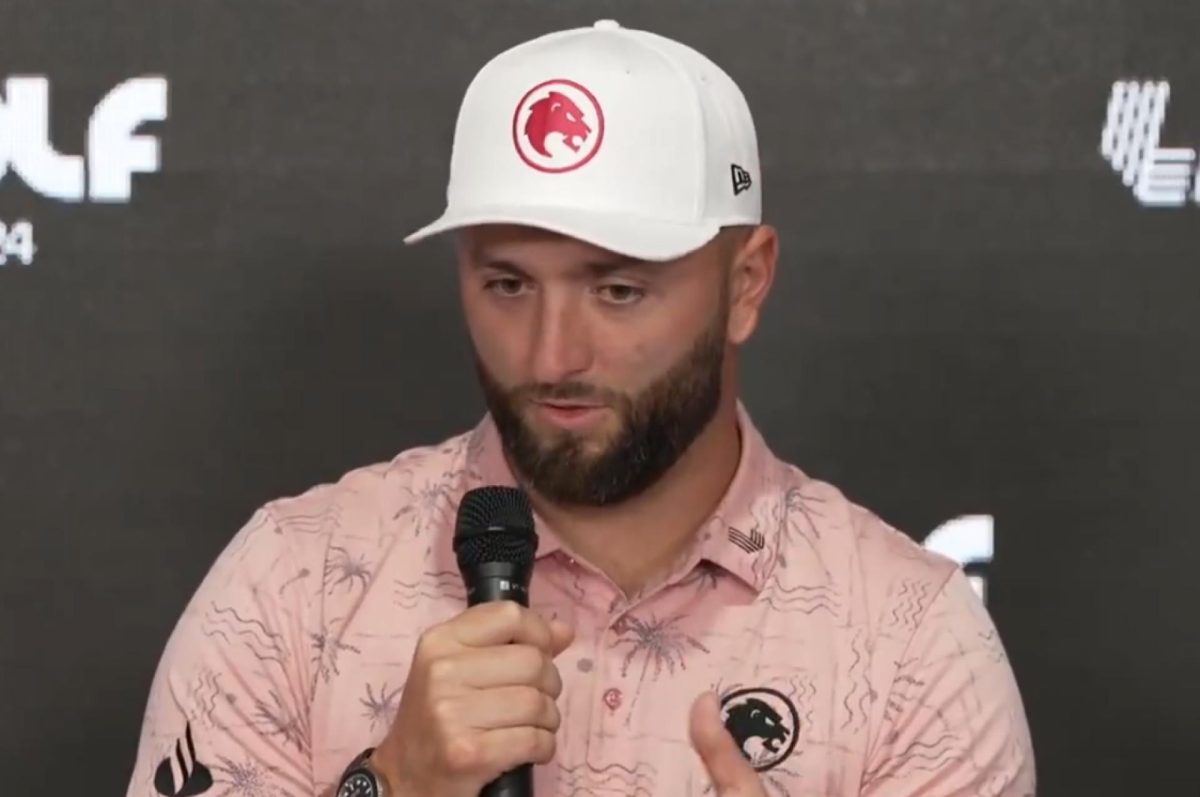
That’s why this Tuesday, in his press conference ahead of the 154th British Open, from Thursday to Sunday at Royal Birkdale, he was asked if the word «impatience» has become part of his vocabulary regarding his relationship with the majors. «No, no. It’s not easy to win a major for anyone in the field. The only impatience I have is to give myself more opportunities. I’ve been able to do it once in the last two years. In the last two PGA Championships. I hope to have another one like that. I want to be there more often. If you give yourself more opportunities, it’s easier to eventually take advantage of one,» he added.
The British Open, which he has always said he would most like to win because of everything it represents for golf in general and for Spanish golf in particular (it was precisely in Birkdale, 50 years ago, that Seve Ballesteros made his debut, later winning it in ’79, ’84, and ’88), is the tournament where he has had the least success. His best chance came in 2021 at Royal St. George’s. In 2023, he finished second, spurred on by a 63 on Saturday, but he never really had a shot at the title. The same story applies to his seventh-place finish in 2024. Last year, he only shot under 70 once and finished 34th. For this occasion, he is drawing on one of his most unpleasant experiences in the Claret Jug race. Carnoustie 2018, when he missed the cut: “It was played in similar conditions to what we have this week. I saw the fine rough and thought it was okay to miss fairways. I started hitting a lot of drivers and went home on Saturday. Now, when the course is firm, I want to be on the fairway and have more control over the ball. Fliers start appearing in the rough, and it’s difficult to find the green even from 100 yards (90 meters). It’s important to put the ball where you need it to be off the tee.”
His preparation, with the LIV on hiatus since the beginning of June (it will return to action on August 6 in Bedminster), has essentially focused on last week’s Scottish Open. It was the first European Tour event since he settled the fines issue with an agreement that will also see him play the Irish Open, the Spanish Open, Wentworth, and the Alfred Dunhill Open in the coming months. He started off on the wrong foot at The Renaissance, but managed to right the ship. “I’m not worried. I had 11 bad holes. I didn’t get the ball on the fairway enough on the first day. I hit three greens in 11 holes or something like that. It’s a recipe for bad things to happen on a golf course that was firm and windy. After that, I think I played pretty well.”
Three years without a major title, unless he changes things on Sunday, haven’t so far planted any doubts in the mind of the Basque golfer, who doesn’t take anything for granted based on his innate abilities. As they say, talent either needs to be nurtured or it withers. “Doubt is part of being a professional athlete. You’re never 100% convinced that something is going to happen, that’s why you put effort into it. You prepare as best you can and try to compete. If things don’t go well, you try to learn and be better prepared for the next one,” he argues. Things haven’t gone well for him in the majors lately. What he has learned from it, and whether he is better prepared this time, will be seen in the coming days.
. Rewrite the h2, h3 tags. Each sentence must be different from the original text. Rewrite in a full 350 words minimum engaged blog article in spannish language, with html tag and format
,
, ,
, . Use 3 or 4 different subheading with
html tag. Give it lot of nuance. Write as real spannish and human journalist wrote it for Google News. Add strategic SEO keywords in . At the end of article, add 3
- sources, magazines or citations with the names of spannish specialists, journalists, experts in golf.
Como joven medio de comunicación independiente, Total News Golf.com necesita tu ayuda. Apóyenos siguiéndonos y marcándonos como favoritos en Google News. Gracias por su apoyo !
html tag. Give it lot of nuance. Write as real spannish and human journalist wrote it for Google News. Add strategic SEO keywords in . At the end of article, add 3
- sources, magazines or citations with the names of spannish specialists, journalists, experts in golf.
Como joven medio de comunicación independiente, Total News Golf.com necesita tu ayuda. Apóyenos siguiéndonos y marcándonos como favoritos en Google News. Gracias por su apoyo !
Como joven medio de comunicación independiente, Total News Golf.com necesita tu ayuda. Apóyenos siguiéndonos y marcándonos como favoritos en Google News. Gracias por su apoyo !